

Right after I graduated from college, I started working for the Department of Natural Resources. I was hired to teach outdoor education to visitors and campers at one of the state parks. I was so excited! I was sent to a week-long training and one of the classes I took was on Michigan butterflies. I learned how to look for Monarch eggs so I could raise the caterpillars and use them for my classes at the park. It also helps to boost the population as well. All I can say is that this is something I have done many times since. My daughter is really into it, so this summer we are going full-on BUTTERFLY!
If you are interested in raising Monarchs, it is very easy to do. You need a few things and but most importantly, commitment. The first thing you will need is some sort of vented aquarium. Below is the set up I use.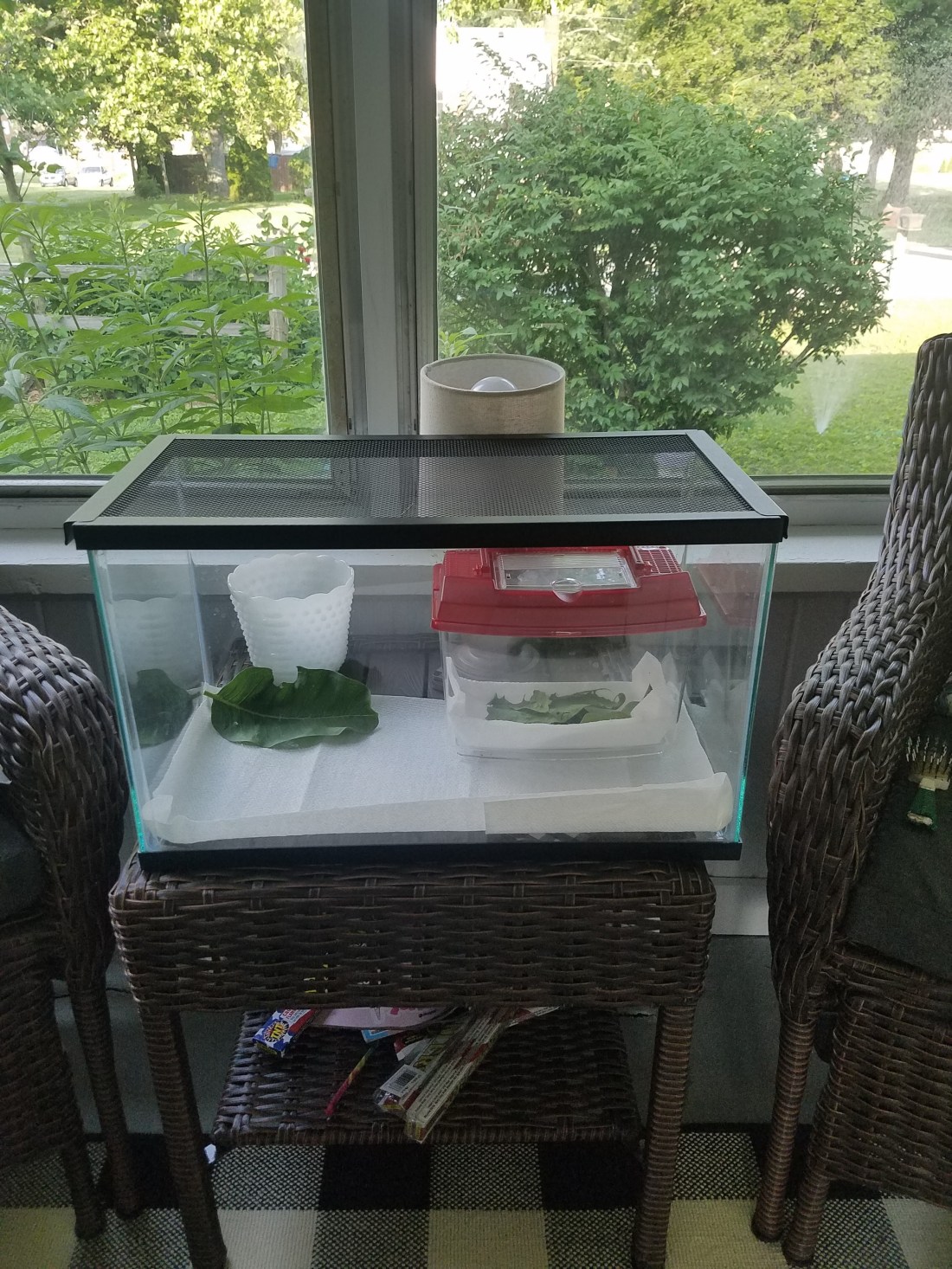
I have a smaller terrarium inside a larger aquarium. I keep the smaller caterpillars in the small one and the bigger caterpillars move into the bigger aquarium. If you only have one, that is fine also.
The next thing you need to do is go searching for caterpillars that are already hatched or search for eggs. You will need to find a patch of milkweed to find them. Monarch butterflies are completely dependent on milkweed. That is all they eat and the only plant adult females will lay their eggs on.
Once you find a patch, you will need to start doing some investigating. Over the last few years, I have allowed milkweed to grow in my garden around all of my other native plants. It is pretty easy for me to find these little cuties. You will need to flip up the leaves of the plant and start looking. Be careful to not damage the plants. You will be looking for a tiny whitish egg on the bottom of the leaf. 
It’s a little blurry, but that is what you are looking for. It is VERY tiny, it is hard to make a comparison. It is smaller than a pinhead. If you are having a hard time determining if what you are looking at is a Monarch egg, just leave it and move on to looking for a caterpillar.
So, if you think that egg is small, imagine what the first instar of a Monarch looks like. They are also VERY small. They are easy to miss. You will more than likely find a caterpillar that is a little more advanced, maybe in the 3rd or 4th instar.
The caterpillar in the paper towel is the 1st instar. It is about 1 cm long. The caterpillar above it, on the leaf, is the 2nd instar. It measures about 2-3 cm. These can be a little hard to find. The best way to find them is to start looking for chew holes on the leaves. These caterpillars make very small chew holes. If you see a big section of leaf gone, you will probably find a 4th or 5th instar caterpillar. The 5th instar is the last stage before going into its chrysalis. 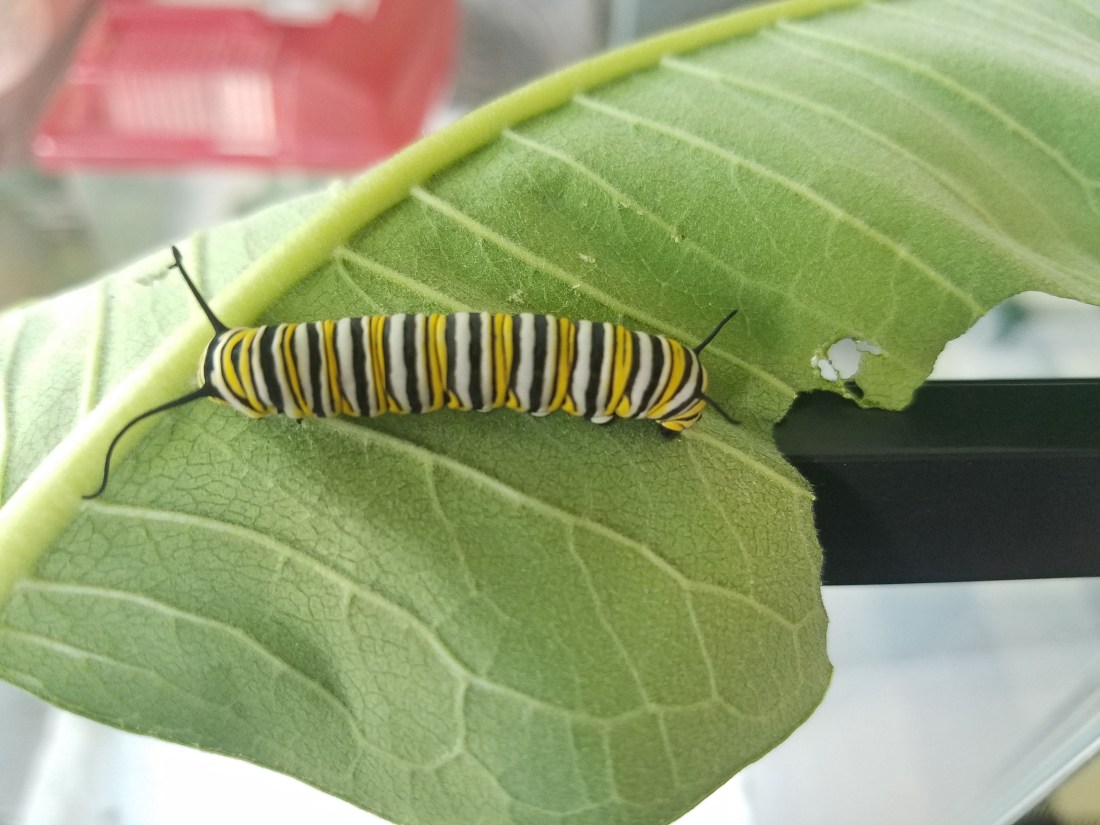
This is Big Hoss, we found it in the 1st instar stage. He is now in the 4th stage. By this stage, they are ferocious eaters. You will need to change out the leave daily so make sure you have milkweed nearby. The leaves start to dry out and they can’t eat them. If you do find any eggs, you have to make sure you mist them so the egg doesn’t dry out. When the egg hatches, you can get rid of the leaf.
If takes about 2 weeks for the caterpillar to reach its 5th instar. If will then go into a J-shaped position up higher in your enclosure. It will then create its chrysalis. It will undergo a metamorphosis during that time.
Since I don’t have any caterpillars in that stage right now, I will continue this on another thread.
We are part of a citizen science Monarch group called, Monarch Watch. Through this group, we have purchased butterfly wing tags and data collection information. Before we release the butterfly, you tag it with a wing tag, and then it can be tracked. This is something anyone can do! If you are interested the website is www.monarchwatch.org
Get your kids interested in taking care of nature and being part of a bigger project! Stay tuned for the next edition on the coming stages and tagging the Monarchs.
Happy ButterFlying!
 My 1850 Farmhouse